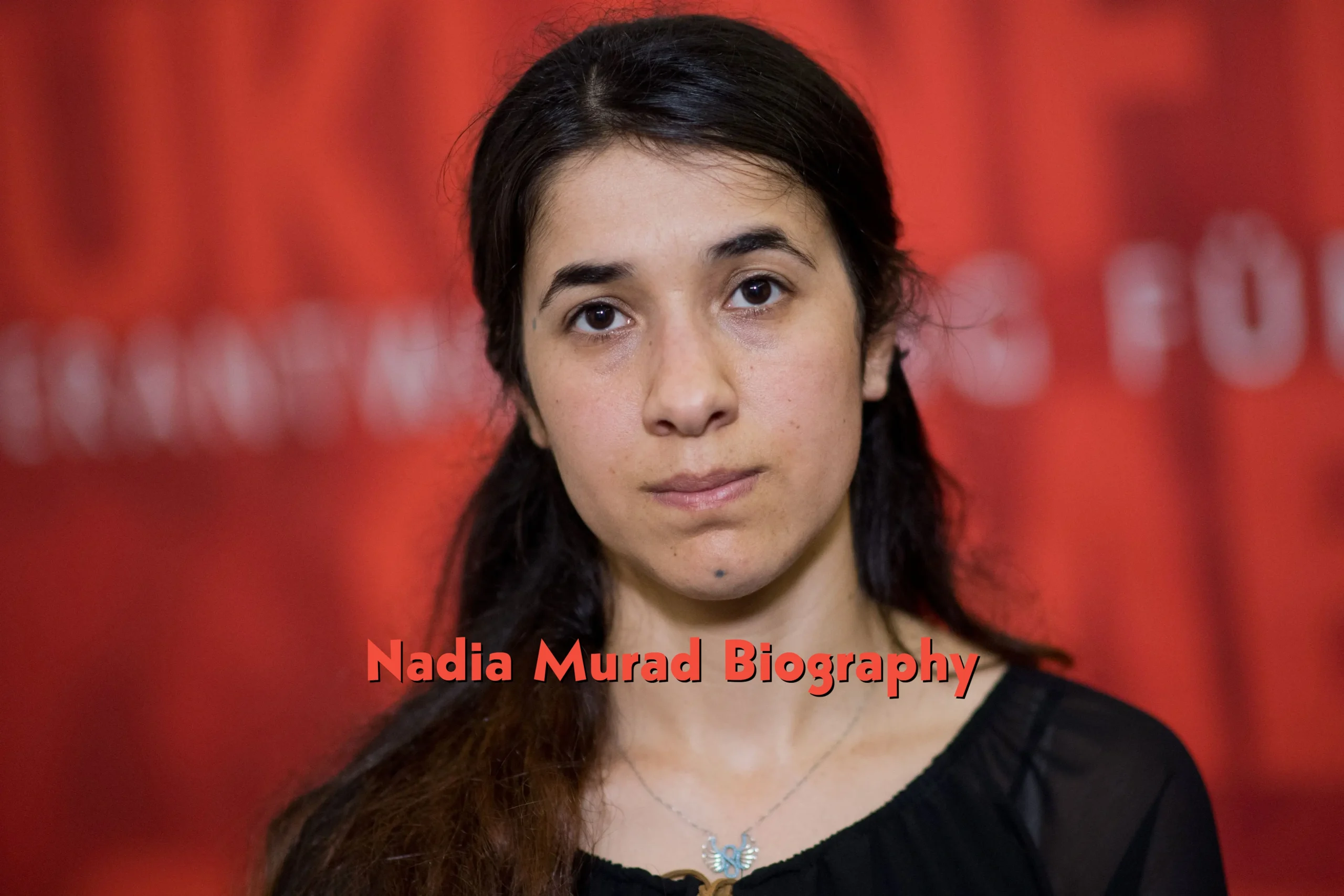
Nadia Murad, whose full name is Nadia Murad Basee Taha, is an Iraqi Yazidi human rights activist, author and Nobel Peace Prize laureate. Born on March 10, 1993, in Kocho, Iraq, she became internationally known after surviving captivity by ISIS and speaking publicly about the persecution of the Yazidi people. Her testimony helped expose the systematic use of sexual violence during armed conflict and strengthened calls for justice for survivors.
In 2018, Murad received the Nobel Peace Prize jointly with Congolese physician Denis Mukwege for their efforts to end sexual violence as a weapon of war. She later founded Nadia’s Initiative, an organization focused on rebuilding communities affected by genocide. Her work combines international advocacy with practical support for survivors seeking to rebuild their lives.
See Also: Emma Watson Biography
Nadia Murad Biography Highlights
- Full Name: Nadia Murad Basee Taha
- Date of Birth: March 10, 1993
- Age: 33 years old in 2026
- Place of Birth: Kocho, Sinjar District, Iraq
- Nationality: Iraqi
- Ethnicity: Yazidi
- Profession: Human rights activist and author
- Husband: Abid Shamdeen
- Year of Marriage: 2018
- Known For: Advocacy for Yazidi survivors and victims of sexual violence
- Major Award: Nobel Peace Prize, 2018
- Organization: Nadia’s Initiative
- Memoir: The Last Girl: My Story of Captivity, and My Fight Against the Islamic State
Nadia Murad Early Life and Family Background
Nadia Murad grew up in Kocho, a farming village in Iraq’s Sinjar District, as part of a large Yazidi family. Before the events that transformed her life, she hoped to become a history teacher or work as a makeup artist.
In a 2016 interview with TIME, Murad described herself as a village girl whose life revolved around school, friends and neighbours. She explained that she had never visited a major city before ISIS attacked her community. This account illustrates how abruptly her ordinary life was replaced by violence and displacement.
The Yazidis are an ethno-religious minority with deep historical ties to northern Iraq. In August 2014, ISIS attacked Yazidi communities across the Sinjar region, killing thousands of people and abducting women and children. Murad’s mother and six of her brothers were among her family members killed during the assault.
In a 2024 British Vogue interview about her life before and after ISIS, Murad recalled setting up a makeshift beauty salon at age 13 in a sheep house on her family’s farm. She used to do her friends’ hair and makeup, a small childhood ambition that later took on a painful association with her captivity. One of her captors had forced her to apply makeup, turning something she once enjoyed into a reminder of the abuse she endured.
Nadia Murad and ISIS Captivity
In August 2014, ISIS militants seized Kocho and subjected its residents to mass violence. Murad was captured and taken into captivity, where she endured sexual violence and other abuse. She eventually escaped with help from a local family and reached safety.
Her experience formed part of ISIS’s systematic campaign against the Yazidi people, which included mass killings, forced displacement, abductions and sexual slavery.
Murad’s first major public accounts of the atrocities helped bring international attention to the persecution. In a 2016 TIME interview marking the second anniversary of the Sinjar massacre, she described how ISIS separated men and boys from their families before killing them and explained the fate of her mother and brothers. Her testimony documented the devastating impact of the attack on individual families while highlighting the wider persecution of Yazidis.
Rather than remaining silent about her experience, Murad decided to speak publicly because other women and girls remained in captivity. Her decision became the foundation of her subsequent human rights work.
Nadia Murad’s Human Rights Activism
After escaping captivity, Murad began addressing journalists, governments and international institutions about the crimes committed against Yazidis. She called for perpetrators to face prosecution and argued that survivors needed long-term assistance, including healthcare, education, housing and economic opportunities.
In 2016, she became the United Nations’ first Goodwill Ambassador for the Dignity of Survivors of Human Trafficking. The appointment recognized her efforts to raise awareness of trafficking and sexual violence.
Her advocacy also addresses how survivors are treated when sharing their experiences. In 2022, she helped launch the Murad Code, developed with the UK government and other partners, to establish ethical standards for documenting conflict-related sexual violence. Its principles emphasize survivors’ dignity, safety, consent and control over their own stories.
Murad’s approach reflects a broader point she made in her 2024 British Vogue interview: survivors should not be defined exclusively by the violence they experienced. She spoke about wanting other survivors to know that they can still experience love, enjoy ordinary activities and build lives beyond their trauma.
Nadia Murad and the Nobel Peace Prize
In 2018, Murad received the Nobel Peace Prize jointly with Denis Mukwege, a Congolese physician recognized for treating survivors of sexual violence in the Democratic Republic of the Congo. The Norwegian Nobel Committee honoured them for their efforts to end the use of sexual violence as a weapon of war and armed conflict.
Their work represents two complementary approaches to the problem. Mukwege has provided medical care to survivors, while Murad has used her testimony and advocacy to demand justice and international accountability.
In an October 2019 60 Minutes interview with CBS News, Murad explained why she had chosen to speak publicly about rape despite the shame and stigma associated with it in her community. She said that concern for relatives and other women still held captive by ISIS had motivated her to speak. The same report documented her collaboration with human rights lawyer Amal Clooney to pursue legal accountability for ISIS crimes.
The CBS News interview with Murad and Clooney also highlighted a major obstacle to justice: collecting evidence and securing prosecutions for genocide and sexual slavery. For Murad, the Nobel Prize provided a platform, but it did not resolve the need for legal action or the suffering of displaced Yazidis.
Nadia’s Initiative and the Reconstruction of Sinjar
Murad founded Nadia’s Initiative in 2018 to support survivors of genocide and help rebuild communities devastated by ISIS. Its work includes projects involving healthcare, education, women’s empowerment, infrastructure and economic development in Sinjar.
In her June 2024 British Vogue interview, Murad discussed the development of a women’s centre in Sinjar. The centre was designed to offer vocational training, literacy and language classes, healthcare and psychosocial support. Its services connect directly to the practical needs of women returning to a region where years of violence had damaged homes, livelihoods and essential services.
Murad has also stressed the importance of accountability in preventing future atrocities. In the same interview, she explained that perpetrators must understand they could face survivors in court. This principle connects her reconstruction work with her wider campaign for justice: rebuilding communities is important, but survivors also need recognition of the crimes committed against them.
Nadia Murad’s Book
Murad published her memoir, The Last Girl: My Story of Captivity, and My Fight Against the Islamic State, in 2017.
The book recounts her childhood in Kocho, the ISIS attack on her village, her captivity and escape, and her decision to campaign for justice. It also documents the suffering of Yazidi women and girls and explains why their experiences must be recognized internationally.
The memoir helped establish Murad as an important first-person voice in discussions about genocide and conflict-related sexual violence. Rather than presenting her story as an isolated tragedy, she uses it to explain the wider persecution of her community and the importance of holding perpetrators accountable.
Nadia Murad Husband and Personal Life
Nadia Murad is married to Abid Shamdeen, a fellow Yazidi activist. The couple married in 2018, not 2023 as some inaccurate online biographies claim.
Murad generally keeps her personal life private, but she has occasionally spoken about the importance of recovering a sense of normality after trauma. In her 2024 British Vogue interview, she described running as a form of therapy and spoke about her wish to have children when the time was right.
These details offer a fuller picture of Murad beyond her public identity as a survivor and activist. Her story is not only about what she endured but also about her efforts to reclaim the ordinary experiences and personal ambitions that violence disrupted.
Nadia Murad Awards and Honors
Murad has received several major international honours for her human rights work:
- Nobel Peace Prize (2018): Jointly awarded with Denis Mukwege for efforts to end sexual violence as a weapon of war.
- Sakharov Prize for Freedom of Thought (2016): Awarded by the European Parliament.
- Václav Havel Human Rights Prize (2016): Recognized her contribution to human rights.
- UN Goodwill Ambassador (2016): Appointed to advocate for the dignity of survivors of human trafficking.
These honours have increased the international visibility of her campaign for justice and support for Yazidi survivors.
Nadia Murad’s Legacy
Murad’s influence extends beyond her testimony about ISIS captivity. She has helped bring international attention to the Yazidi genocide, advocated for prosecutions and supported efforts to rebuild communities devastated by violence.
Through Nadia’s Initiative, she has connected international awareness with practical recovery projects. Through the Murad Code, she has also promoted more ethical ways of documenting sexual violence, helping ensure that survivors are treated with dignity when sharing their experiences.
Her work demonstrates that international recognition is only one part of justice. Survivors also need long-term support, accountability for perpetrators and the opportunity to shape their communities’ recovery.
FAQs About Nadia Murad
Who Is Nadia Murad?
Nadia Murad is an Iraqi Yazidi human rights activist, author and Nobel Peace Prize laureate known for advocating for survivors of genocide, human trafficking and conflict-related sexual violence.
When Was Nadia Murad Born?
She was born on March 10, 1993, in Kocho, in Iraq’s Sinjar District.
How Old Is Nadia Murad?
Nadia Murad is 33 years old in 2026.
Why Did Nadia Murad Win the Nobel Peace Prize?
She jointly received the 2018 Nobel Peace Prize with Denis Mukwege for their efforts to end the use of sexual violence as a weapon of war.
Who Is Nadia Murad’s Husband?
Her husband is Abid Shamdeen, a fellow Yazidi activist. They married in 2018.
What Is Nadia’s Initiative?
Nadia’s Initiative is an organization founded by Murad to help rebuild communities affected by genocide and support survivors, particularly in Sinjar, Iraq.
What Is Nadia Murad’s Book Called?
Her memoir is titled The Last Girl: My Story of Captivity, and My Fight Against the Islamic State, published in 2017.
What Is Nadia Murad Known For?
She is known for bringing international attention to the persecution of Yazidis by ISIS and campaigning for justice for survivors of sexual violence.
Sources
- Nobel Prize — Nadia Murad
- TIME — Nadia Murad on the Sinjar Massacre
- British Vogue — Nadia Murad Interview
- CBS News — Nadia Murad and Amal Clooney Vow to Take ISIS to Court
- Nadia’s Initiative — Official Website
- United Nations — Nadia Murad: Voice of Survivors

Hi, I’m Christopher Iwundu, the founder and writer behind Vidmoki. I started this site to help readers learn more about public figures and their favorite celebrities through well-sourced, easy-to-read biographies.
Every profile is researched from official records and reputable news sources, and I update pages when new information comes out.