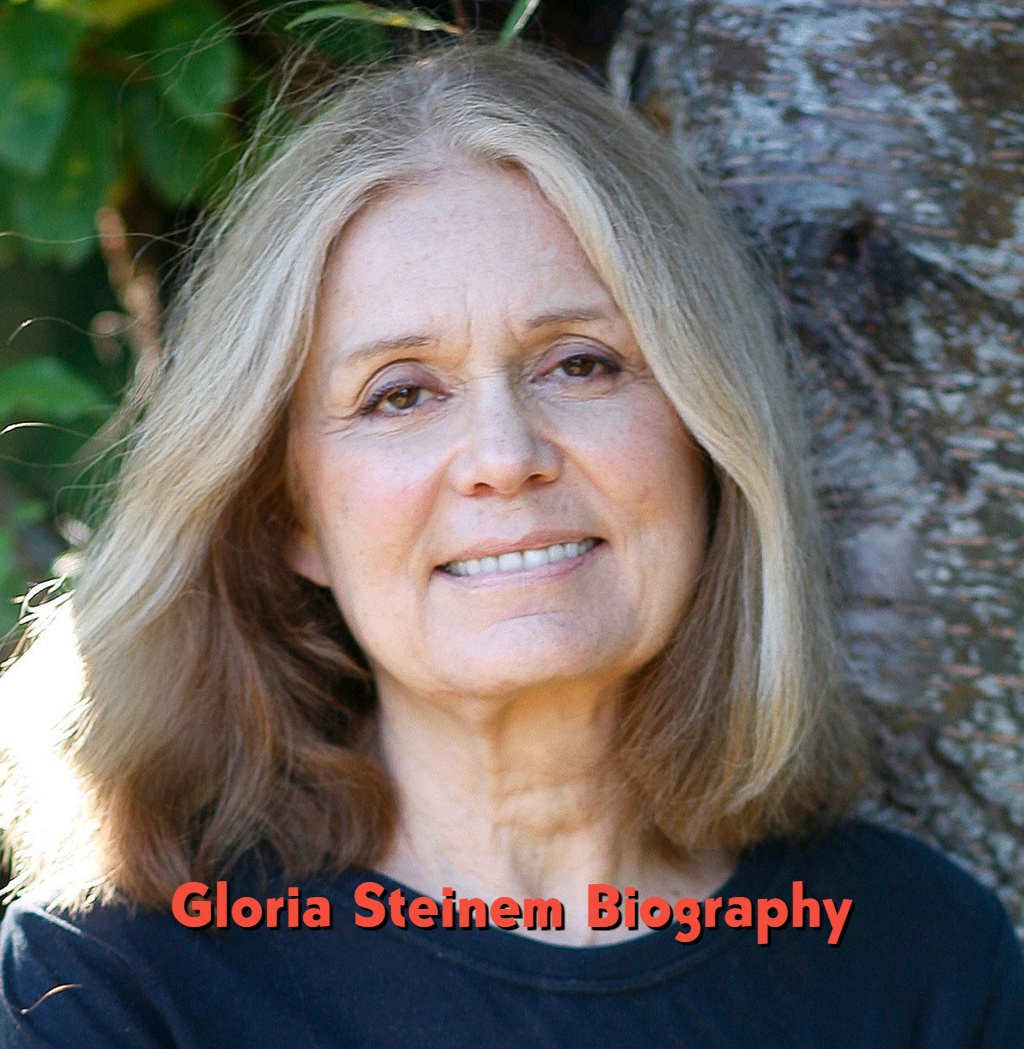
Gloria Steinem was an American journalist, author and feminist activist who became one of the most influential figures in the modern women’s rights movement. Through journalism, political organizing and public speaking, she challenged gender discrimination and advocated for reproductive freedom, equal opportunities and greater representation of women in politics.
Steinem rose to national prominence during the 1960s and 1970s. She helped establish Ms. magazine, co-founded the National Women’s Political Caucus and campaigned for legal and social reforms affecting women. Her activism also addressed the connections between gender, race, class and economic inequality.
She died on September 2, 2026, at the age of 92. Her decades of activism helped shape American feminism and influenced generations of journalists, writers and campaigners.
See Also: Rosa Parks Biography
Gloria Steinem Biography Highlights
- Full Name: Gloria Marie Steinem
- Date of Birth: March 25, 1934
- Place of Birth: Toledo, Ohio, United States
- Date of Death: September 2, 2026
- Age at Death: 92 years
- Nationality: American
- Profession: Journalist, author and feminist activist
- Education: Smith College
- Husband: David Bale
- Marriage: 2000–2003
- Children: None
- Known For: Women’s rights activism and feminist journalism
- Major Publication: Ms. magazine
- Notable Book: My Life on the Road
- Major Honor: Presidential Medal of Freedom
Gloria Steinem’s Early Life and Family Background
Gloria Marie Steinem was born on March 25, 1934, in Toledo, Ohio, to Leo Steinem and Ruth Steinem. Her father worked as a traveling antiques dealer, and the family frequently moved around the United States.
Her mother had worked as a journalist and teacher but experienced serious health difficulties. After her parents separated in 1944, Steinem remained in Toledo to help care for her mother until her older sister, Susanne, was able to provide greater support.
These experiences exposed Steinem to the challenges women could face when dealing with family responsibilities, financial insecurity and limited opportunities. They later informed her interest in women’s independence and social equality.
According to the National Women’s History Museum’s biography of Steinem, her childhood circumstances and early exposure to social inequality helped shape the activist she eventually became.
Gloria Steinem’s Education
Steinem attended Waite High School in Toledo before enrolling at Smith College in Massachusetts. She graduated in 1956 with a degree in government, earning academic honors.
After graduation, she received a Chester Bowles Fellowship that allowed her to spend two years studying and researching in India. There, she encountered grassroots political organizing and nonviolent activism influenced by the legacy of Mahatma Gandhi.
The experience broadened her understanding of political participation and community action. These lessons later influenced her approach to organizing, public speaking and feminist advocacy.
Her connection to Smith College remained an important part of her life. The institution later preserved extensive materials documenting her writing, activism and personal history.
Gloria Steinem’s Journalism Career
After returning to the United States, Steinem began building a career as a freelance journalist in New York City. During the late 1950s and early 1960s, women journalists frequently faced barriers when seeking assignments covering politics and serious public affairs.
Steinem pushed beyond the subjects traditionally assigned to female writers and pursued stories about political campaigns, culture and social inequality.
In 1968, she helped establish New York magazine, where she worked as a political columnist and feature writer. Her reporting increasingly focused on women’s experiences and the discrimination embedded in American institutions.
Her journalism provided a foundation for her later activism, allowing her to reach a broad audience while documenting issues that many mainstream publications overlooked.
Gloria Steinem’s Playboy Bunny Investigation
One of Steinem’s most famous early assignments involved working undercover at the Playboy Club in New York City.
In 1963, she worked as a Playboy Bunny for an article published in Show magazine. Her report, titled I Was a Playboy Bunny, investigated the working conditions and expectations placed on women employed at the club.
The article attracted national attention by revealing the less glamorous realities behind the establishment’s public image. It also demonstrated Steinem’s willingness to investigate controversial subjects and examine how women were treated in the workplace.
The assignment helped establish her public profile, although she later had to work to ensure that editors took her broader political reporting seriously.
Gloria Steinem and the Women’s Liberation Movement
Steinem became increasingly involved in the women’s liberation movement during the late 1960s. Her journalism introduced feminist issues to mainstream audiences, while her public appearances helped make her one of the movement’s most recognizable spokespersons.
In 1969, she spoke at an abortion-rights event in New York and shared her own experience of obtaining an abortion in London when she was 22. The experience strengthened her public commitment to reproductive freedom.
Steinem argued that women should have equal opportunities in education, employment and politics, as well as control over decisions affecting their bodies and personal lives.
Her activism placed her alongside other influential campaigners, including Betty Friedan, whose book The Feminine Mystique had helped challenge traditional expectations of women’s domestic roles.
Gloria Steinem and Ms. Magazine
One of Steinem’s most significant achievements was helping establish Ms. magazine, a publication created to take women’s experiences and feminist concerns seriously.
The magazine first appeared as an insert in New York magazine in 1971 before becoming an independent publication in 1972. Steinem worked with fellow editors and activists, including Patricia Carbine and Letty Cottin Pogrebin.
Ms. covered reproductive rights, domestic violence, workplace discrimination, sexual harassment and women’s political participation. It also provided a platform for writers and campaigners whose perspectives were frequently overlooked by mainstream media.
The publication became an influential voice in American feminism. Steinem continued to contribute to its work for decades, and her writing remains available through the Ms. magazine website.
National Women’s Political Caucus
In 1971, Steinem helped establish the National Women’s Political Caucus alongside prominent activists and political figures, including Bella Abzug, Shirley Chisholm and Betty Friedan.
The organization aimed to increase women’s participation in American politics and encourage more women to pursue elected and appointed positions.
Steinem believed that lasting progress required women to have a greater role in shaping public policy. The caucus therefore supported political participation and candidates committed to gender equality.
She also helped establish other organizations, including the Women’s Action Alliance, the Ms. Foundation for Women and the Women’s Media Center, which works to improve women’s representation in media.
Gloria Steinem and Reproductive Rights
Reproductive freedom remained central to Steinem’s activism. She supported access to contraception and abortion, arguing that women could not achieve full equality without control over their reproductive decisions.
She connected reproductive rights to education, employment and economic independence. In her view, women needed the freedom to decide whether and when to have children to participate equally in public and professional life.
Steinem also supported the Equal Rights Amendment, which sought to establish constitutional protections against discrimination based on sex. Although the amendment did not secure the required ratifications within its original deadline, the campaign remained an important part of the American women’s rights movement.
Her work placed her among the prominent advocates for reproductive freedom, alongside organizations such as Planned Parenthood.
Gloria Steinem and Intersectional Feminism
Steinem’s activism increasingly addressed the connections between gender, race, class and other forms of inequality. She supported efforts to build a women’s movement that reflected the experiences of women from different social and economic backgrounds.
The concept of intersectionality was later developed by legal scholar Kimberlé Crenshaw, who explained how overlapping forms of discrimination can shape people’s experiences.
Steinem’s career also involved criticism over the representation of women of color and working-class women within mainstream feminism. These debates highlighted the importance of ensuring that feminist organizing addressed different forms of disadvantage rather than treating women’s experiences as identical.
Her later work emphasized collaboration across communities and the broader relationship between gender equality and social justice.
Gloria Steinem’s Books
Steinem wrote books and essays about feminism, politics, journalism and personal experiences. Her work combined stories from her own life with arguments about social change and women’s independence.
Some of her best-known publications include:
- Outrageous Acts and Everyday Rebellions (1983)
- Revolution from Within (1992)
- Moving Beyond Words (1993)
- My Life on the Road (2015)
- The Truth Will Set You Free, But First It Will Piss You Off! (2015)
Her writing helped communicate feminist ideas to readers outside political organizations and academic institutions.
My Life on the Road
Published in 2015, My Life on the Road is one of Steinem’s best-known books. The memoir reflects on her decades of traveling across the United States for journalism, activism and political organizing.
Rather than focusing exclusively on major political events, Steinem explores the conversations and encounters that shaped her understanding of people and communities. The book illustrates how listening to ordinary people influenced her approach to social change.
Gloria Steinem’s Husband and Marriage
Steinem married David Bale, a British-born businessman and environmental activist, in 2000, when she was 66. Bale was also the father of actor Christian Bale.
The marriage attracted attention because Steinem had spent much of her public life questioning traditional expectations surrounding marriage and women’s roles.
She explained that her decision to marry reflected her personal circumstances rather than a rejection of her feminist principles. The couple remained married until Bale died from brain lymphoma in 2003.
Did Gloria Steinem Have Children?
Gloria Steinem did not have biological children. Throughout her adult life, she challenged the assumption that women needed to marry or become mothers to lead fulfilling lives.
Her personal choices reflected her broader argument that women should be free to determine their own paths rather than conform to traditional expectations about marriage and motherhood.
Gloria Steinem’s Awards and Honors
Steinem received numerous awards and honors for her journalism, writing and activism.
Among the most significant was the Presidential Medal of Freedom, awarded by President Barack Obama in 2013. The honor is the highest civilian award in the United States.
She was also inducted into the National Women’s Hall of Fame in 1993 and received the Freedom Award from the National Civil Rights Museum in 2019. In 2021, she received Spain’s Princess of Asturias Award for Communication and Humanities.
These recognitions reflected her influence on journalism, public debate and the struggle for gender equality.
Gloria Steinem’s Death and Legacy
Gloria Steinem died on September 2, 2026, at the age of 92. Her death was reported by major news organisations, including Reuters.
Her legacy is closely associated with the development of modern American feminism. Through journalism, political organizing and public speaking, she helped bring issues such as reproductive freedom, workplace discrimination and women’s political representation into mainstream debate.
Her career was not without controversy or criticism, particularly over the representation of different groups within the feminist movement. Nevertheless, her influence on American journalism and women’s rights activism remained substantial over several decades.
Steinem also helped create institutions that continued the work beyond her individual public profile, including Ms. magazine and the National Women’s Political Caucus. Her career demonstrated how journalism and grassroots organizing could work together to challenge established social and political structures.
Frequently Asked Questions About Gloria Steinem
Who Was Gloria Steinem?
Gloria Steinem was an American journalist, author and feminist activist best known for her leadership in the modern women’s rights movement and her role in founding Ms. magazine.
When Was Gloria Steinem Born?
She was born on March 25, 1934, in Toledo, Ohio, United States.
How Old Was Gloria Steinem When She Died?
Steinem was 92 years old when she died on September 2, 2026.
Who Was Gloria Steinem’s Husband?
She married David Bale, a British-born businessman and environmental activist, in 2000. He died in 2003.
What Did Gloria Steinem Study?
She studied government at Smith College and graduated in 1956.
What Was Gloria Steinem Famous For?
She was known for feminist journalism, co-founding Ms. magazine, helping establish the National Women’s Political Caucus and advocating for reproductive rights and gender equality.
What Was Gloria Steinem’s Most Famous Book?
One of her best-known books is My Life on the Road, published in 2015. It recounts her experiences traveling and organizing for social change.
Sources
- National Women’s History Museum — Gloria Steinem
- Gloria Steinem’s Official Website — About
- Smith College — Gloria Steinem
- Ms. Magazine — Gloria Steinem
- Reuters — Gloria Steinem Dies at 92

Hi, I’m Christopher Iwundu, the founder and writer behind Vidmoki. I started this site to help readers learn more about public figures and their favorite celebrities through well-sourced, easy-to-read biographies.
Every profile is researched from official records and reputable news sources, and I update pages when new information comes out.