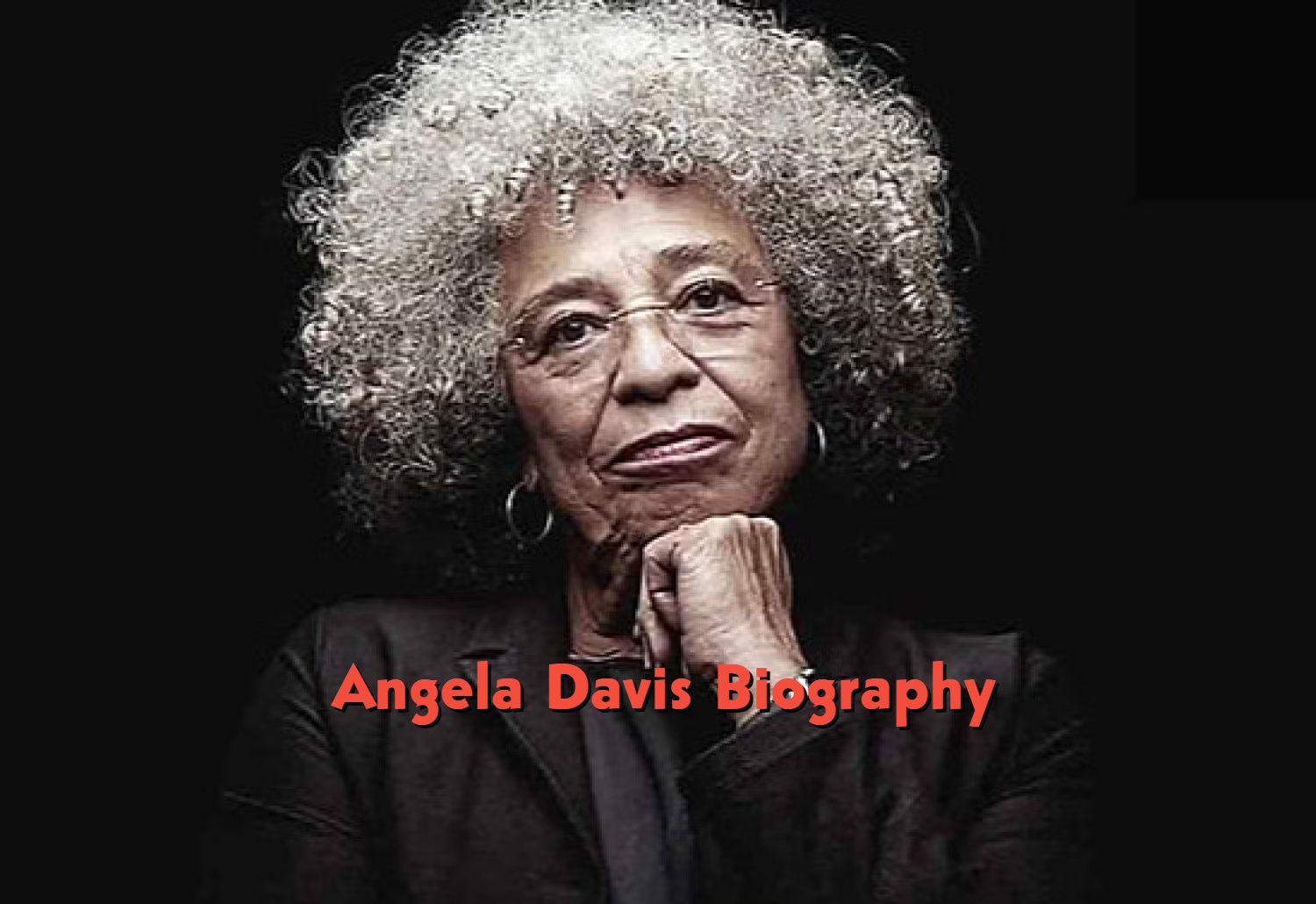
Angela Davis, born Angela Yvonne Davis, is an American scholar, author and activist whose work has made her one of the most recognizable figures in the history of Black liberation, feminism and prison reform. Born on January 26, 1944, in Birmingham, Alabama, she grew up in a segregated community where racial violence was a constant reality. Her experiences during childhood, combined with her later education in philosophy and her involvement in political movements, shaped a career centered on racial justice, gender equality and opposition to mass incarceration.
Davis became nationally known in the late 1960s and early 1970s through her activism, association with the Communist Party and support for imprisoned Black activists. Her connection to the Soledad Brothers case eventually led to her being charged with murder, kidnapping and conspiracy after weapons she had purchased were used during a 1970 courthouse escape attempt in California. She spent roughly 16 months in custody before being acquitted of all charges in 1972.
Rather than ending her public career, the experience strengthened Davis’s focus on prisons and political repression. She returned to academia, wrote influential books including Women, Race & Class and Are Prisons Obsolete?, and became a leading advocate for prison abolition and social justice.
See Also: Desmond Tutu Biography
Angela Davis Biography Highlights
- Full Name: Angela Yvonne Davis
- Date of Birth: January 26, 1944
- Place of Birth: Birmingham, Alabama, United States
- Nationality: American
- Profession: Scholar, author, professor and activist
- Known For: Civil rights activism, Black feminism and prison abolition advocacy
- Education: Brandeis University, University of Paris, Goethe University Frankfurt, University of California, San Diego
- Political Affiliation: Communist Party USA, formerly
- Husband: None publicly known
- Children: None publicly known
- Major Case: Soledad Brothers-related prosecution
- Arrest: 1970
- Acquittal: 1972
- Major Books: Women, Race & Class, Are Prisons Obsolete? and Angela Davis: An Autobiography
- Academic Institution: University of California, Santa Cruz
- Major Cause: Prison abolition and racial justice
Angela Davis Early Life and Family Background
Angela Yvonne Davis was born on January 26, 1944, in Birmingham, Alabama, to Sallye and Frank Davis. Her mother was an elementary school teacher, while her father owned a service station. She grew up in Birmingham during the era of racial segregation, when Black residents faced widespread discrimination in education, housing, employment and public life.
Davis’s neighborhood was known as Dynamite Hill because of the number of homes in the area that were targeted by bombings and attacks. Growing up around this environment gave her an early understanding of the dangers of racism and political violence.
Her childhood was also shaped by the civil rights movement. As a teenager, Davis organized interracial study groups, although police eventually broke them up. She also knew some of the girls who were killed in the 1963 Birmingham church bombing, an attack that became one of the most notorious acts of racial violence during the civil rights era.
These experiences helped shape the political consciousness that would later become central to her activism.
Angela Davis Education
Angela Davis was an academically gifted student and began her higher education at Brandeis University in Massachusetts.
At Brandeis, she studied philosophy and became particularly interested in the ideas of German philosopher and social theorist Herbert Marcuse. Marcuse became an important intellectual influence on Davis and encouraged her interest in Marxist thought, political philosophy and social change.
After completing her undergraduate studies, Davis continued her education in Europe. She studied philosophy at the University of Paris and later attended Goethe University Frankfurt in Germany.
She eventually returned to the United States and studied at the University of California, San Diego, where she earned a master’s degree in philosophy.
Her education provided the academic foundation for the intersection of race, class, gender and political power that would later become a defining feature of her scholarship.
Angela Davis Political Awakening
Angela Davis became politically active during the 1960s, a period marked by the civil rights movement, antiwar protests and the growth of Black Power.
While studying in Europe and later in California, she became increasingly interested in Marxist politics and revolutionary movements.
She became involved with several organizations, including the Black Panther Party, although much of her political work was conducted through the Che-Lumumba Club, an all-Black branch of the Communist Party in Southern California.
Her political beliefs developed around the idea that racial inequality could not be separated from economic inequality and broader structures of power.
Davis’s activism therefore went beyond traditional civil rights campaigns. She increasingly focused on capitalism, racism, class inequality, gender discrimination and the treatment of political prisoners.
Angela Davis and the Communist Party
Angela Davis became a member of the Communist Party USA during the late 1960s.
Her membership became one of the most controversial aspects of her public career, particularly during the Cold War, when communism was viewed with intense suspicion in the United States.
Davis was a member of the Che-Lumumba Club, the Communist Party’s all-Black branch in Southern California. Her political affiliation became widely known while she was also building an academic career.
She later became the Communist Party’s vice-presidential candidate in 1980 and again in 1984, running alongside presidential candidate Gus Hall.
Although Davis eventually left the Communist Party, her political thinking continued to be influenced by Marxism and socialist ideas.
Angela Davis UCLA Career
In 1969, Angela Davis became a lecturer in philosophy at the University of California, Los Angeles (UCLA).
Her appointment quickly attracted controversy because of her political beliefs and her affiliation with the Communist Party.
The university administration attempted to remove her from her position because of her political affiliation. Davis challenged the decision and successfully fought to retain her job, but her contract was eventually terminated in 1970.
Her brief UCLA career brought national attention to the conflict between academic freedom and political ideology.
The controversy also made Davis increasingly recognizable outside academic circles.
Angela Davis and the Soledad Brothers
One of the most important developments in Davis’s activism was her involvement in the campaign supporting the Soledad Brothers.
The Soledad Brothers were three Black prisoners—George Jackson, Fleeta Drumgo and John Cluchette—who were accused of killing a prison guard at California’s Soledad Prison.
Davis became an outspoken supporter of the prisoners and helped establish the Soledad Brothers Defense Committee.
She believed the case represented broader problems involving racial discrimination and the treatment of Black prisoners within the American prison system.
Her relationship with George Jackson also became an important part of the prosecution’s later case against her.
Angela Davis Marin County Courthouse Incident
On August 7, 1970, an armed attempt was made to free prisoners during a court hearing at the Marin County Courthouse in California.
Jonathan Jackson, the younger brother of George Jackson, entered the courtroom with weapons and took several people hostage. A shootout followed as the group attempted to leave the courthouse.
Jonathan Jackson, Judge Harold Haley and two prisoners were killed during the confrontation.
Several of the weapons used during the incident had been purchased by Davis.
Although Davis was not present at the courthouse, authorities accused her of supplying the weapons and participating in the plot.
She was charged with murder, kidnapping and conspiracy.
Davis maintained that she had no knowledge that the weapons would be used in the courthouse takeover.
Angela Davis FBI Most Wanted Arrest
After charges were filed, Angela Davis went into hiding.
On August 18, 1970, she was placed on the FBI’s Ten Most Wanted Fugitives list, becoming the third woman to appear on the list. Her image became one of the most recognizable symbols of the government’s pursuit of radical activists during the era.
Davis remained a fugitive for about two months.
On October 13, 1970, FBI agents arrested her at a Howard Johnson Motor Lodge in New York City. She was unarmed and did not resist arrest.
Her arrest received international attention and transformed her from a prominent activist into a global symbol of political repression.
Angela Davis Prison Time and Trial
Davis spent approximately 16 months in jail while awaiting trial.
Her imprisonment generated an international campaign demanding her release. The Free Angela movement attracted supporters from civil rights organizations, political groups, religious communities and artists.
Her trial began in 1972 and received extensive media coverage.
Prosecutors argued that Davis had been connected to the courthouse attack through the weapons used during the incident. Davis’s defense maintained that she had no involvement in the attack itself.
On June 4, 1972, a jury found Davis not guilty on all charges of murder, kidnapping and conspiracy.
Her acquittal became one of the defining moments of her early public life.
Angela Davis Free Angela Movement
The campaign to free Angela Davis became an international political movement.
Supporters organized demonstrations, raised money for her legal defense and distributed Free Angela materials across the United States and other countries.
Musicians and artists also expressed support for her. The campaign became part of the wider political struggles of the early 1970s surrounding race, prisons, feminism and political repression.
Davis’s eventual acquittal gave the movement a major victory and helped establish her as an internationally recognized activist.
The experience also influenced her later thinking about the relationship between prisons, racism and political power.
Angela Davis Activism After Acquittal
After her acquittal, Davis returned to teaching, writing and political organizing.
She became increasingly focused on the treatment of prisoners and political repression. Her own experience in jail had given her a personal perspective on the American prison system.
In the years following her trial, she helped establish the National Alliance Against Racist and Political Repression, an organization that campaigned around prisoners’ rights and political repression.
Her activism gradually expanded beyond the specific political struggles of the 1960s and 1970s.
She began examining how race, gender and economic class interacted within American society.
Angela Davis Black Feminism
Angela Davis became one of the most influential thinkers associated with Black feminism.
She challenged forms of feminism that focused primarily on the experiences of white middle-class women while overlooking the experiences of Black women and women from working-class communities.
Her work argued that racism, sexism and economic inequality were interconnected rather than separate problems.
This approach became particularly influential after the publication of her book Women, Race & Class in 1981.
The book examined the history of American feminism and highlighted the contributions of Black women while criticizing the exclusion of race and class from many traditional feminist discussions.
Angela Davis Women, Race & Class
Women, Race & Class became one of Angela Davis’s most influential books.
Published in 1981, the book examined the relationships between women’s rights, slavery, racism, labor and class inequality in American history.
Davis explored the experiences of Black women and the ways in which racial and economic structures shaped their lives differently from those of white women.
The book helped establish her as an important scholar of feminism and social justice.
It also contributed to the broader development of intersectional approaches to understanding race, gender and class.
Angela Davis Prison Abolition Activism
Prison reform and abolition became central to Angela Davis’s later activism.
Rather than focusing only on improving prison conditions, Davis questioned whether societies should rely so heavily on incarceration in the first place.
Her book Are Prisons Obsolete?, published in 2003, became one of the most widely discussed works associated with the modern prison abolition movement.
Davis argued that prisons are connected to broader systems of racial and economic inequality and encouraged society to consider alternatives to incarceration.
Her own imprisonment and acquittal in the 1970s played an important role in shaping these views.
Angela Davis and Critical Resistance
In 1997, Angela Davis became one of the co-founders of Critical Resistance, an organization focused on challenging what activists describe as the prison-industrial complex.
The organization advocates alternatives to incarceration and challenges systems of policing, imprisonment and surveillance.
Davis’s involvement strengthened her reputation as one of the most prominent intellectual voices associated with prison abolition.
Her work in this area has influenced academic discussions, activist movements and debates over criminal justice reform.
Angela Davis Academic Career
After her acquittal, Davis returned to academia and continued developing her career as a scholar.
She taught at several institutions before becoming a professor at the University of California, Santa Cruz.
In 1991, she became a professor in the university’s History of Consciousness program and later held the position of Presidential Chair in African American and Feminist Studies.
She retired from teaching in 2008, but continued writing, lecturing and participating in political activism.
Her academic work has covered philosophy, feminism, race, class, prisons and political theory.
Angela Davis Books
Angela Davis has written several influential books throughout her career.
Some of her best-known works include:
- Angela Davis: An Autobiography (1974)
- Women, Race & Class (1981)
- Women, Culture & Politics (1989)
- Blues Legacies and Black Feminism (1998)
- Are Prisons Obsolete? (2003)
- Abolition Democracy: Beyond Empire, Prisons, and Torture (2005)
- The Meaning of Freedom (2012)
- Freedom Is a Constant Struggle (2016)
Her books have made her work accessible to readers beyond academia and have helped spread her ideas about race, gender, political repression and incarceration.
Angela Davis Later Life and Activism
Although Angela Davis retired from formal university teaching, she continued to lecture, write and participate in political movements.
Her activism has increasingly focused on prison abolition, racial justice, feminism and international human rights.
She has also spoken about police violence, economic inequality and the relationship between domestic and international struggles for freedom.
Davis has remained a prominent public intellectual whose speeches and writings continue to influence activists and students.
Her later career demonstrates that her activism did not end with the civil rights era or her 1972 acquittal.
Angela Davis Views on Race, Gender and Class
A central theme of Davis’s work is that systems of oppression often operate together.
She argues that racial discrimination cannot always be separated from economic inequality or gender discrimination.
Her scholarship therefore examines the experiences of people who are affected by multiple forms of inequality simultaneously.
This perspective has made her an influential figure in discussions of Black feminism and intersectional social justice.
Angela Davis Awards and Honors
Angela Davis has received numerous academic and civic honors for her scholarship and activism.
She has received honorary degrees from universities and recognition from organizations involved in human rights, education and social justice.
Her influence has extended well beyond the United States, particularly among scholars and activists studying race, feminism, prisons and political movements.
Her greatest contribution, however, has arguably been the influence of her books and ideas on generations of students and activists.
Angela Davis Personal Life
Angela Davis has generally kept her personal life separate from her public activism and academic career.
She has never been known for building her public identity around marriage or family life. Instead, much of the attention surrounding her has focused on her scholarship, political activism and public campaigns.
Her early political relationships and associations became widely discussed because of their connection to the political movements of the 1960s and 1970s.
However, Davis’s public legacy is primarily defined by her intellectual and political work.
Angela Davis Husband and Children
Angela Davis has not been publicly known to have a husband or children.
Her public biography has largely centered on her academic career, activism, writing and political organizing rather than family life.
Because she has maintained a relatively private personal life, online claims about relationships or family members should be treated cautiously unless supported by reliable sources.
Angela Davis Net Worth
Angela Davis’s exact net worth is not reliably established through authoritative public financial records.
She built her career primarily through teaching, writing, scholarship and activism rather than entertainment or commercial business.
As a result, specific net worth figures frequently published online should be treated cautiously unless supported by credible financial documentation.
Angela Davis Legacy
Angela Davis’s legacy extends across several major movements.
She became an important figure in the Black liberation movement, a major voice in Black feminism and one of the best-known advocates of prison abolition.
Her 1970 arrest and subsequent acquittal transformed her into an international political symbol, but her influence ultimately grew far beyond the courtroom.
Her books helped connect questions of race, gender and class, while her later prison activism challenged conventional ideas about incarceration and criminal justice.
For many supporters, Davis represents a lifelong commitment to challenging systems of inequality. For critics, her early Communist Party affiliation and radical political positions have remained controversial.
Regardless of political perspective, her influence on American political thought, feminist scholarship and prison abolition activism has been substantial.
Why Was Angela Davis Arrested?
Angela Davis was arrested in 1970 after authorities connected firearms she had purchased to an armed takeover at the Marin County Courthouse in California.
She was charged with murder, kidnapping and conspiracy in connection with the incident.
Davis denied involvement in the courthouse attack and maintained that she did not know her weapons would be used there.
After spending approximately 16 months in custody, she was acquitted of all charges in June 1972.
Why Is Angela Davis Famous?
Angela Davis is famous for her work as a scholar, author and activist.
She became nationally known because of her political activism and Communist Party affiliation before becoming internationally famous following her 1970 arrest and 1972 acquittal.
She is also widely recognized for her contributions to Black feminism and prison abolition, particularly through books such as Women, Race & Class and Are Prisons Obsolete?.
What Is Angela Davis Known For?
Angela Davis is best known for her activism around racial justice, Black feminism, prison abolition and political repression.
She is also known for her academic career, her association with the Communist Party and her involvement in the Soledad Brothers campaign.
Her books have helped make her one of the most influential scholars of race, gender and class in modern American history.
Angela Davis Importance in American History
Angela Davis became an important figure during one of the most politically turbulent periods in modern American history.
Her activism connected the civil rights movement with the Black Power movement, feminism, socialism and campaigns for prisoners’ rights.
Her prosecution in the early 1970s also became a major example of the political tensions surrounding radical activism during that era.
In the decades that followed, Davis transformed her experiences into scholarship and continued challenging racial and economic inequality.
Her influence remains particularly strong in academic and activist discussions about race, gender, class and incarceration.
FAQs About Angela Davis
Who Is Angela Davis?
Angela Davis is an American scholar, author and activist known for her work on racial justice, Black feminism, prison abolition and political repression.
When Was Angela Davis Born?
Angela Davis was born on January 26, 1944, in Birmingham, Alabama.
Is Angela Davis Still Alive?
Yes. Angela Davis is alive as of 2026 and continues to participate in writing, speaking and activism.
Why Was Angela Davis Arrested?
Davis was arrested in 1970 after weapons she had purchased were used during an armed takeover at the Marin County Courthouse in California. She was charged with murder, kidnapping and conspiracy but was acquitted of all charges in 1972.
How Long Was Angela Davis in Jail?
Angela Davis spent approximately 16 months in custody before being acquitted in 1972.
Was Angela Davis a Black Panther?
Davis was involved with the Black Panther Party during the late 1960s, but she was also a member of the Communist Party’s Che-Lumumba Club, which became an important part of her political activity.
Was Angela Davis a Communist?
Yes. Angela Davis was a member of the Communist Party USA. She later ran as the party’s vice-presidential candidate in 1980 and 1984 before eventually leaving the party.
What Is Angela Davis’s Most Famous Book?
One of Angela Davis’s most influential books is Women, Race & Class, published in 1981. Another major work is Are Prisons Obsolete?, which examines the American prison system and argues for considering alternatives to incarceration.
Does Angela Davis Have a Husband?
Angela Davis has not been publicly known to have a current husband. She has generally kept her personal life private and focused public attention on her academic and political work.
Does Angela Davis Have Children?
Angela Davis is not publicly known to have children.
What Is Angela Davis’s Legacy?
Angela Davis is remembered for her contributions to Black feminism, racial justice, prison abolition and political activism. Her scholarship and activism have influenced generations of students, academics and social justice movements.