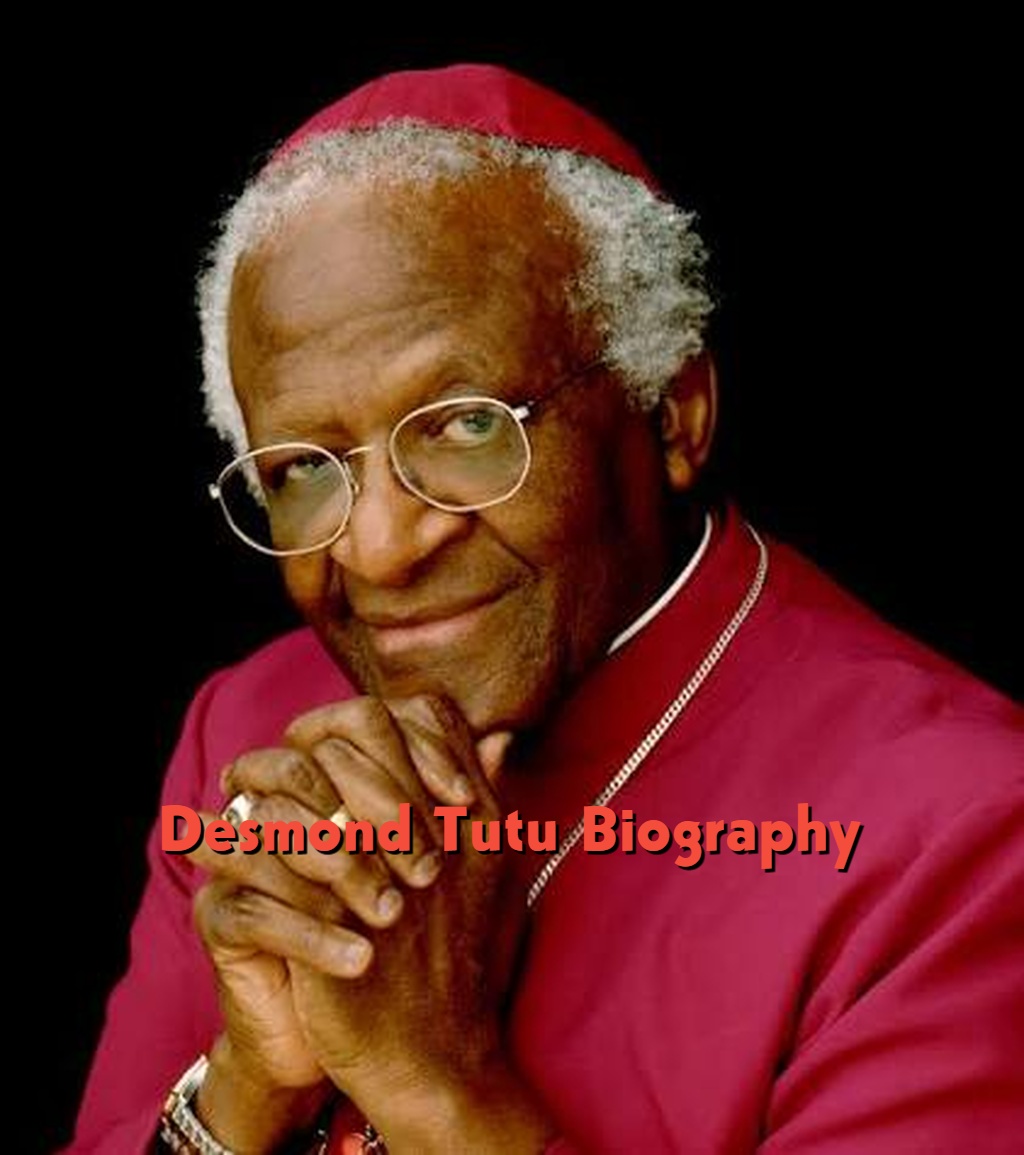
Desmond Tutu, born Desmond Mpilo Tutu, was a South African Anglican bishop and human rights activist whose voice became closely associated with the struggle against apartheid. Born on October 7, 1931, in Klerksdorp, South Africa, he grew up under a system of racial discrimination that would later become the foundation of his lifelong fight for equality. Through the church, civil society and international advocacy, Tutu challenged apartheid while promoting nonviolence, justice and reconciliation.
Long before he became an internationally recognized Nobel Peace Prize winner, Tutu had built a career in education and the Anglican Church. His decision to leave teaching because of the discriminatory Bantu Education system pushed him toward the priesthood, where he eventually rose to become the first Black Archbishop of Cape Town. His outspoken opposition to apartheid made him one of the most influential religious leaders in South Africa and a major international voice for racial justice.
See Also: Gloria Steinem Biography
Desmond Tutu Biography Highlights
- Full Name: Desmond Mpilo Tutu
- Date of Birth: October 7, 1931
- Place of Birth: Klerksdorp, South Africa
- Date of Death: December 26, 2021
- Place of Death: Cape Town, South Africa
- Age at Death: 90
- Nationality: South African
- Profession: Anglican bishop, theologian, author and human rights activist
- Wife: Leah Nomalizo Tutu
- Children: Four
- Major Organization: South African Council of Churches
- Known For: Fighting apartheid and promoting racial equality
- Major Award: Nobel Peace Prize
- Nobel Prize Year: 1984
- Historic Position: First Black Archbishop of Cape Town
- Major Post-Apartheid Role: Chairman of the Truth and Reconciliation Commission
- Famous For: His nonviolent opposition to apartheid and advocacy for reconciliation
Desmond Tutu Early Life and Family Background
Desmond Mpilo Tutu was born on October 7, 1931, in Klerksdorp, South Africa, to Zachariah Tutu and Aletha Matlhare. His father was a teacher and school principal, while his mother worked as a domestic worker. Tutu grew up with his siblings in a South Africa where racial inequality shaped almost every aspect of daily life.
His family later moved to Ventersdorp after his father received a teaching appointment there. Growing up Black in segregated South Africa exposed Tutu to the restrictions and discrimination imposed on non-white communities.
Religion also became an important part of his childhood. Tutu was raised in the Anglican Church, and his early encounters with Anglican priests influenced his understanding of Christianity and social responsibility. Among the people who influenced him was Trevor Huddleston, an Anglican priest and outspoken opponent of racial discrimination.
Tutu’s childhood experiences with poverty, segregation and unequal treatment eventually became important influences on his later activism.
Desmond Tutu Education
Desmond Tutu received his early education in South Africa before attending Western High School in Johannesburg. His education was interrupted for a period after he developed tuberculosis, but he eventually recovered and completed his secondary education.
Tutu originally wanted to become a doctor. However, his family could not afford the cost of medical school, forcing him to choose another career path.
He enrolled at Bantu Normal College near Pretoria and trained as a teacher. He later earned a Bachelor of Arts degree from the University of South Africa.
His interest in religion eventually led him away from teaching and toward theology. He studied at St Peter’s Theological College in Rosettenville before being ordained into the Anglican priesthood.
Tutu later moved to England, where he studied theology at King’s College London. His education in Britain broadened his theological knowledge and exposed him to a different social and academic environment before he returned to South Africa.
Desmond Tutu Wife and Marriage
Desmond Tutu married Leah Nomalizo Shenxane on July 2, 1955. She later became widely known as Leah Tutu.
The couple married before Tutu became internationally famous and remained together throughout his long career in the Anglican Church and civil rights movement.
Leah supported her husband’s public work while developing her own involvement in social causes. She became particularly involved in advocacy for domestic workers and other community issues.
Desmond and Leah Tutu remained married for more than six decades until his death in 2021.
Desmond Tutu Children
Desmond Tutu and Leah Tutu had four children:
- Trevor Thamsanqa Tutu
- Thandeka Theresa Tutu
- Nontombi Naomi Tutu
- Mpho Andrea Tutu
His children grew up while their father was becoming one of the most prominent opponents of apartheid. Several later became involved in religious, humanitarian, educational and social causes.
Tutu’s family therefore remained connected to the values of public service and social justice that defined much of his life.
Desmond Tutu Teaching Career
Before becoming a priest, Desmond Tutu worked as a teacher.
He entered the teaching profession after completing his qualifications because his original ambition to study medicine was financially out of reach. He taught in South African schools during a period when the government was introducing increasingly restrictive educational policies for Black students.
Tutu became increasingly uncomfortable with the direction of Black education under apartheid-era policies. He believed the system deliberately limited opportunities for Black South Africans and reinforced racial inequality.
His experience as a teacher eventually became one of the reasons he decided to leave the profession and pursue religious work.
Why Did Desmond Tutu Leave Teaching?
Desmond Tutu left teaching in 1958 in protest against the Bantu Education system.
The Bantu Education system was designed to provide Black South Africans with a separate form of education that was substantially inferior to that available to white South Africans. Tutu believed the system denied Black children the opportunities they deserved.
Rather than continue teaching under policies he regarded as unjust, he resigned and entered the Anglican priesthood.
This decision became an important turning point in his life. His opposition to educational inequality eventually developed into a broader campaign against apartheid and racial discrimination.
Desmond Tutu Anglican Church Career
Tutu was ordained as an Anglican priest in 1961 after completing his theological studies.
He initially served as a parish priest before moving into academic and church positions. He taught theology at the Federal Theological Seminary in Alice and later served as Anglican chaplain at the University of Fort Hare.
His career within the Anglican Church continued to advance. In 1975, he became Dean of St Mary’s Cathedral in Johannesburg, becoming the first Black person to hold the position.
In 1976, he became Bishop of Lesotho. Two years later, he was appointed general secretary of the South African Council of Churches.
These positions gave Tutu an increasingly powerful platform from which to challenge apartheid.
Desmond Tutu Fight Against Apartheid
Desmond Tutu became one of the most outspoken religious opponents of apartheid.
He argued that racial segregation was fundamentally incompatible with Christianity and human dignity. Rather than calling for violent retaliation, he promoted nonviolent resistance, international pressure and peaceful political change.
Tutu used sermons, speeches and international appearances to draw attention to the conditions faced by Black South Africans.
He called for equal rights, an end to discriminatory laws, better education and the removal of policies that forcibly separated communities.
His activism attracted criticism from the apartheid government, but it also earned him growing international support.
Desmond Tutu and the Soweto Uprising
The Soweto uprising of 1976 became one of the major turning points in South Africa’s anti-apartheid struggle.
Black students in Soweto protested against the government’s education policies, particularly the compulsory use of Afrikaans as a language of instruction in Black schools. The demonstrations were met with violence by security forces.
Tutu condemned the violence and supported efforts to respond peacefully to the crisis.
The uprising drew international attention to the brutality of apartheid and strengthened opposition to the government. Tutu’s position as a religious leader allowed him to speak publicly about the violence while calling for a peaceful solution.
Desmond Tutu South African Council of Churches
In 1978, Tutu became general secretary of the South African Council of Churches, becoming the first Black person to hold the position.
The council represented numerous Christian denominations and gave Tutu an influential national platform.
He used the position to campaign against apartheid and to support communities affected by racial discrimination and political violence.
Tutu also encouraged churches to challenge injustice rather than remain silent. His leadership helped make the South African Council of Churches an important institution within the anti-apartheid movement.
His international travel also allowed him to explain the realities of apartheid to governments, churches and organizations outside South Africa.
Desmond Tutu Nobel Peace Prize
Desmond Tutu received the Nobel Peace Prize in 1984 for his role in the nonviolent campaign against apartheid.
The award recognized him as an important unifying leader in South Africa’s struggle for racial equality. It also brought international attention to his approach, which combined religious principles with political activism.
Winning the Nobel Peace Prize transformed Tutu into an even more prominent international figure.
He used the platform to continue calling for an end to apartheid and for peaceful negotiations that would eventually lead to a democratic South Africa.
Desmond Tutu as Bishop and Archbishop
In 1985, Tutu became Bishop of Johannesburg.
The following year, he achieved another historic milestone when he became Archbishop of Cape Town, making him the first Black person to hold the position.
As archbishop, he continued his opposition to apartheid while emphasizing nonviolence and reconciliation.
His sermons attracted large audiences, and his public statements were widely reported internationally. He frequently challenged both the South African government and other institutions that he believed were contributing to racial injustice.
Tutu remained one of the most recognizable religious figures in South Africa until his retirement from the archbishopric in 1996.
Desmond Tutu and Nelson Mandela
Desmond Tutu and Nelson Mandela became two of the most recognizable figures associated with South Africa’s transition away from apartheid.
Although they came from different backgrounds and held different positions, both opposed racial discrimination and supported the creation of a democratic South Africa.
Mandela became the country’s first Black president in 1994, while Tutu remained an influential religious and civil society leader.
Their relationship became particularly important during the post-apartheid period, when Tutu took on a major role in helping South Africa confront the abuses of its past.
Desmond Tutu Truth and Reconciliation Commission
In 1995, President Nelson Mandela appointed Desmond Tutu chairman of the Truth and Reconciliation Commission.
The commission was established to investigate serious human rights violations committed during the apartheid era.
Rather than simply prosecuting every person involved in the conflict, the commission created a process through which victims could tell their stories and perpetrators could disclose their involvement in politically motivated crimes.
Tutu became closely associated with the commission’s emphasis on truth, forgiveness and reconciliation.
The hearings exposed many details about killings, torture, disappearances and other abuses committed during apartheid.
His leadership reflected his belief that South Africa needed to confront its history openly if it was going to build a stable democratic future.
Desmond Tutu Human Rights Activism
Desmond Tutu’s activism extended beyond opposition to apartheid.
Throughout his later life, he spoke about poverty, racism, political corruption, HIV/AIDS, discrimination and other human rights issues.
He also supported causes involving gender equality and LGBTQ+ rights and continued to criticize governments and institutions when he believed they were violating human dignity.
His approach was rooted in the idea that human rights should apply equally to everyone, regardless of race, nationality or social position.
Even after retiring from formal church leadership, Tutu continued using his international reputation to advocate for vulnerable communities.
Desmond Tutu Later Life and Activism
After retiring as Archbishop of Cape Town in 1996, Tutu remained active in public life.
He continued giving speeches, writing, participating in international organizations and supporting human rights campaigns.
He became a member of The Elders, an independent group of global leaders working on peace, human rights and other international issues.
Tutu also continued to speak about South Africa’s political development. He was willing to criticize leaders from his own political tradition when he believed they were failing to uphold democratic values.
His later years were therefore not a period of complete retirement. He remained an influential public figure until his health declined.
Desmond Tutu Awards and Honors
Desmond Tutu received numerous awards and honorary degrees during his lifetime.
His most important international honor was the Nobel Peace Prize in 1984.
Other major honors included the United States Presidential Medal of Freedom, which he received in 2009, and numerous awards from universities, governments and international organizations.
His achievements included:
- Winning the 1984 Nobel Peace Prize
- Becoming the first Black general secretary of the South African Council of Churches
- Becoming the first Black Bishop of Johannesburg
- Becoming the first Black Archbishop of Cape Town
- Chairing the Truth and Reconciliation Commission
- Receiving the Presidential Medal of Freedom
- Becoming an internationally recognized advocate for human rights and reconciliation
Desmond Tutu Death
Desmond Tutu died on December 26, 2021, in Cape Town, South Africa, at the age of 90.
His death was followed by tributes from political leaders, religious organizations, human rights groups and people around the world.
He was remembered for his role in opposing apartheid, his commitment to nonviolence and his work promoting reconciliation after the end of racial segregation.
Tutu’s death marked the passing of one of the most recognizable moral voices of the anti-apartheid era.
Desmond Tutu Legacy
Desmond Tutu’s legacy is closely connected to South Africa’s transformation from apartheid to democracy.
His opposition to racial segregation demonstrated the influence that religious leaders and civil society could have in challenging oppressive political systems.
He also left an important legacy through his belief in reconciliation. His work with the Truth and Reconciliation Commission showed his determination to help South Africans confront the violence of the past without allowing the country to become trapped in cycles of revenge.
Tutu’s influence also extended beyond South Africa. His international advocacy made him an important figure in global discussions about human rights, racial equality, peace and social justice.
For many people, his life represents the combination of moral courage, public activism and a commitment to reconciliation.
Desmond Tutu Net Worth
Desmond Tutu’s exact net worth has not been reliably established through authoritative public financial records.
Unlike entertainers and business personalities, Tutu’s public career was centered primarily on religious leadership, activism, teaching and humanitarian work rather than commercial wealth.
Because reliable financial documentation is limited, specific net worth figures published online should be treated cautiously.
Desmond Tutu Political Views and Social Causes
Although Tutu was primarily a religious leader, he was highly outspoken on political and social issues.
He opposed apartheid throughout his career and supported democracy, racial equality and economic justice.
He also criticized corruption and political leaders when he believed they were acting against the interests of ordinary South Africans.
In later years, Tutu became an outspoken supporter of LGBTQ+ rights and argued that discrimination against people because of their sexuality was incompatible with his understanding of Christianity and human dignity.
His willingness to address controversial issues sometimes created tension with political and religious institutions, but it also reinforced his reputation as an independent moral voice.
Why Was Desmond Tutu Called the Voice of the Voiceless?
Desmond Tutu was often described as a voice for the voiceless because he repeatedly used his public position to speak on behalf of people who had limited political power.
During apartheid, he spoke about racial discrimination, police violence, political imprisonment, forced removals and unequal education.
He continued this approach after apartheid by addressing poverty, corruption, discrimination and human rights violations.
His ability to speak openly while occupying senior positions within the Anglican Church gave him a powerful platform to challenge injustice.
What Was Desmond Tutu Known For?
Desmond Tutu was best known for his opposition to apartheid and his advocacy for nonviolent resistance, racial equality and reconciliation.
He became internationally famous after winning the 1984 Nobel Peace Prize and later became even more closely associated with South Africa’s transition to democracy through his leadership of the Truth and Reconciliation Commission.
His role as Archbishop of Cape Town also made him one of the most prominent religious figures in South Africa.
Desmond Tutu Importance in South African History
Desmond Tutu played an important role in South Africa’s modern history because he opposed apartheid during some of its most difficult years and later helped the country deal with the consequences of the system.
His activism contributed to international pressure against apartheid, while his work with the Truth and Reconciliation Commission helped create a public process for addressing past human rights abuses.
His career therefore covered two major periods of South African history: the struggle against apartheid and the difficult transition toward democracy.
FAQs About Desmond Tutu
Who Was Desmond Tutu?
Desmond Tutu was a South African Anglican bishop, theologian and human rights activist best known for opposing apartheid and promoting racial equality and reconciliation.
When Was Desmond Tutu Born?
Desmond Tutu was born on October 7, 1931, in Klerksdorp, South Africa.
When Did Desmond Tutu Die?
Desmond Tutu died on December 26, 2021, in Cape Town, South Africa, at the age of 90.
Who Was Desmond Tutu’s Wife?
Desmond Tutu was married to Leah Nomalizo Tutu. They married in 1955 and remained together for more than six decades.
How Many Children Did Desmond Tutu Have?
Desmond Tutu and Leah Tutu had four children: Trevor, Thandeka, Nontombi and Mpho.
Why Did Desmond Tutu Leave Teaching?
Tutu left teaching in protest against the Bantu Education system, which he believed provided Black South Africans with an inferior education and reinforced racial inequality.
When Did Desmond Tutu Win the Nobel Peace Prize?
Desmond Tutu won the Nobel Peace Prize in 1984 for his role as a unifying leader in the nonviolent campaign against apartheid.
Was Desmond Tutu an Archbishop?
Yes. Tutu became Archbishop of Cape Town in 1986 and was the first Black person to hold the position.
What Was Desmond Tutu’s Role in the Truth and Reconciliation Commission?
Tutu served as chairman of South Africa’s Truth and Reconciliation Commission, which investigated serious human rights violations committed during the apartheid era and provided a process for victims and perpetrators to give testimony.
What Was Desmond Tutu’s Legacy?
Desmond Tutu is remembered for his opposition to apartheid, his advocacy for human rights, his leadership in the Anglican Church and his work promoting truth and reconciliation in post-apartheid South Africa.