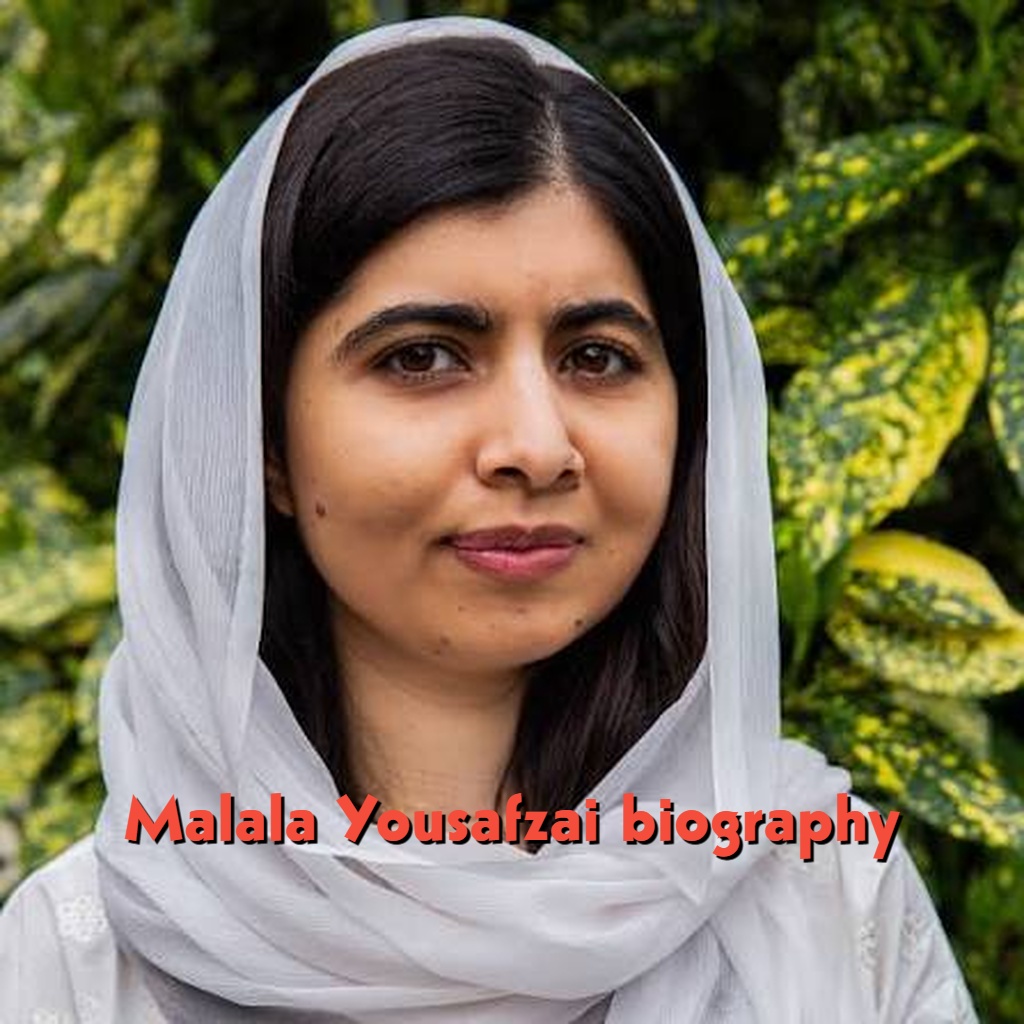
Malala Yousafzai is a Pakistani education activist, author and Nobel Peace Prize laureate known for campaigning for girls’ right to education. She gained international attention after speaking out against the Taliban’s restrictions on girls’ schooling in Pakistan’s Swat Valley and survived an assassination attempt in October 2012. Rather than abandoning her advocacy after the attack, she continued campaigning internationally and co-founded Malala Fund, an organisation working to ensure that every girl can access and complete 12 years of education.
Born on July 12, 1997, Malala became the youngest recipient of the Nobel Peace Prize in 2014, at the age of 17. She later graduated from the University of Oxford, published books about her life and activism, and expanded her work into storytelling and women’s sports. Her 2025 memoir, Finding My Way, also offered a more personal account of growing up under intense public attention and navigating life beyond her identity as an activist.
See Also: Ashutosh Ranka Biography
Malala Yousafzai Biography Highlights
- Full name: Malala Yousafzai
- Date of birth: July 12, 1997
- Age: 29 years old as of 2026
- Place of birth: Mingora, Swat Valley, Pakistan
- Nationality: Pakistani
- Occupation: Education activist, author and film producer
- Known for: Campaigning for girls’ education and surviving a Taliban assassination attempt
- Organisation: Malala Fund
- Education: University of Oxford
- Degree: Philosophy, Politics and Economics (PPE)
- Husband: Asser Malik
- Major award: Nobel Peace Prize, 2014
- Notable books: I Am Malala and Finding My Way
Early Life and Family Background
Malala Yousafzai was born on July 12, 1997, in Mingora, a city in Pakistan’s Swat Valley. Her parents are Ziauddin Yousafzai and Toor Pekai Yousafzai. Her father, an educator who ran a school, played an important role in encouraging her education and supporting her willingness to speak publicly about the treatment of girls.
Malala grew up in a community where girls’ access to education became increasingly threatened as the Taliban expanded its influence in the region. She was particularly concerned about the possibility of losing the opportunity to attend school, something she valued from an early age.
Her father’s commitment to education helped shape her outlook. Rather than accepting restrictions on girls’ schooling as inevitable, Malala began speaking about the issue while she was still a child. Her experiences in Swat later became central to her advocacy and public identity.
The Malala Fund’s account of her early life explains how her father’s school and the growing restrictions imposed by the Taliban influenced her decision to campaign for girls’ right to learn.
Education and Activism Against the Taliban
Malala’s activism developed as the Taliban imposed restrictions on daily life in Swat Valley, including banning girls from attending school. In 2009, when she was around 11 years old, she began documenting the situation through a blog for BBC Urdu under the pseudonym Gul Makai.
Her accounts described the fear and uncertainty experienced by schoolchildren as violence and restrictions increased. The writing gave readers an insight into how the conflict affected ordinary families, particularly girls who wanted to continue their education.
According to the Nobel Prize’s official biography of Malala, she continued speaking out against the suppression of children and young people even as the Taliban’s threats intensified. Her advocacy attracted growing attention in Pakistan and internationally.
In 2011, she received Pakistan’s National Youth Peace Prize, recognising her efforts to promote education and peace. However, her increasing visibility also made her a target for those who opposed her campaign.
Taliban Attack and Recovery
On October 9, 2012, Malala was hit by a Taliban gunman while travelling home from school on a bus in Pakistan. She was 15 years old. The attack was linked to her public advocacy for girls’ education and prompted widespread condemnation internationally.
After receiving emergency treatment in Pakistan, she was transferred to the United Kingdom for specialist medical care. She underwent treatment and rehabilitation in Birmingham, where she eventually settled with her family.
The attack transformed her from a young campaigner known primarily in Pakistan into an internationally recognised advocate. Yet her recovery was not simply a return to public life. She had to adjust to living away from her home country while continuing her education and coping with the consequences of the violence.
In her account of Malala’s story, the United Nations describes how the attack drew worldwide attention to the restrictions faced by girls in Pakistan and strengthened the international movement for the right to education.
Malala later spoke about the purpose she found in continuing her work. In a United Nations interview, she explained that surviving the attack helped her decide to dedicate her life to the education of children.
Malala Fund and the Fight for Girls’ Education
In 2013, Malala and her father co-founded Malala Fund, an organisation that campaigns for every girl to have access to quality education and the opportunity to complete 12 years of schooling.
The organisation works with advocates and local partners to address barriers that prevent girls from attending and completing school. These include poverty, conflict, discrimination, child marriage and government policies that restrict educational opportunities.
Malala Fund’s work extends beyond raising awareness. Its approach includes supporting local organisations, advocating for changes in education policy and pressing governments to invest in girls’ secondary education. The organisation also amplifies the voices of girls and young women directly affected by barriers to schooling.
The organisation’s official mission statement explains its goal of ensuring that girls can complete 12 years of quality education and have greater control over their futures.
Malala has also focused attention on Afghanistan, where Taliban restrictions have denied girls and women access to secondary and university education. She has urged governments and international institutions to take stronger action against policies that exclude women from education and public life.
Nobel Peace Prize and Major Achievements
In 2014, Malala Yousafzai shared the Nobel Peace Prize with Indian children’s rights activist Kailash Satyarthi. At 17, she became the youngest Nobel laureate in history. The award recognised their efforts to oppose the suppression of children and advocate for every child’s right to education.
The Nobel recognition followed several years of campaigning, public speaking and international advocacy. It also gave her a larger platform to draw attention to girls who faced educational barriers but lacked access to international media or political leaders.
Her other notable recognition includes the Sakharov Prize for Freedom of Thought, awarded by the European Parliament in 2013. She was also appointed a United Nations Messenger of Peace in 2017, with a focus on girls’ education.
Rather than limiting her work to her personal experience, Malala has consistently used her public platform to highlight the circumstances of other girls affected by conflict, poverty and discrimination. Her Nobel Prize profile confirms and provides further details about her award and the education campaign that led to it.
Education at the University of Oxford
After moving to the United Kingdom, Malala continued her education while maintaining her international advocacy. She attended the University of Oxford, where she studied Philosophy, Politics and Economics (PPE), a degree programme covering political systems, economic principles and philosophical approaches to public life.
She graduated in 2020. Her university years also gave her an opportunity to experience aspects of student life away from the constant attention that followed her activism.
In interviews and her later writing, Malala has discussed the challenge of balancing her studies with the expectations placed on her as a globally recognised public figure. Her experiences at Oxford also became part of the story she explored in her memoir Finding My Way.
Her educational journey is documented in the official biography published by Malala Fund, which notes her graduation and continued commitment to girls’ education.
Books and Writing Career
Malala has used writing to document her experiences and communicate the broader significance of girls’ education. Her best-known book, I Am Malala: The Girl Who Stood Up for Education and Was Shot by the Taliban, was published in 2013 with journalist Christina Lamb. The memoir recounts her childhood in Pakistan, the Taliban’s growing influence in Swat Valley, the attack and her recovery.
The book helped introduce readers to the experiences of families affected by extremism and restrictions on education. It also placed Malala’s story within a wider discussion about children’s rights, gender equality and the importance of schooling.
In 2014, she published Malala’s Magic Pencil, a children’s book inspired by her childhood wish for a magic pencil that could change the world. The book presents her experiences through a story designed for younger readers.
In October 2025, Malala published Finding My Way, a memoir that explores a different side of her life. Rather than focusing solely on the activism that made her famous, the book discusses growing up in the public eye, friendship, first love, anxiety, personal identity and the process of finding independence.
The official publisher’s description of Finding My Way presents it as a more personal account of her experiences during young adulthood, including the challenges of navigating life beyond the public image created by her activism.
Malala Yousafzai’s Interviews and Quotes
Malala’s interviews have helped explain both the origins of her activism and the personal experiences behind her public work.
In her account published by Malala Fund, she expresses why she tells her story:
“I tell my story not because it is unique, but because it is the story of many girls.”
The statement reflects a central theme of her advocacy: her experiences are significant not only because of what happened to her, but also because they draw attention to girls whose struggles receive less public attention. The quotation appears on Malala Fund’s official story page.
In a United Nations interview about her purpose and resilience, Malala discussed how surviving the attack influenced her decision to continue campaigning for children’s education. She described her life as an opportunity to serve a purpose larger than herself.
More recently, in a 2025 interview with The Guardian ahead of the release of Finding My Way, she reflected on the pressures of growing up as a public figure, the psychological effects of trauma and her changing understanding of activism. The interview about her life beyond the headlines offers additional context for understanding how her personal experiences have developed alongside her public work.
Together, these interviews show that Malala’s public identity involves more than surviving an attack or receiving an international award. Her work has also involved negotiating the expectations placed on her, continuing her education and deciding how to use her influence.
Husband and Personal Life
Malala Yousafzai married Asser Malik in November 2021. The couple held a small Islamic nikkah ceremony at home in Birmingham, England, attended by their families.
Announcing the marriage, Malala wrote, “Today marks a precious day in my life,” adding that they had tied the knot to be partners for life. Her announcement was reported by CBS News.
Malik has worked in Pakistan’s sports industry, including with the Pakistan Cricket Board. In 2025, the couple also became involved in supporting women’s sports through Recess Capital, an investment initiative aimed at expanding opportunities for women in sport. Their work in this area reflects Malala’s interest in gender equality beyond formal education.
Although Malala’s public work has often placed her in the spotlight, her memoir Finding My Way gives greater attention to her private experiences, relationships and the challenges of developing her own identity beyond the expectations associated with her activism.
Conclusion
Malala Yousafzai’s life combines education activism, international recognition, writing and personal growth. From speaking out against restrictions on girls’ schooling in Pakistan to co-founding Malala Fund and receiving the Nobel Peace Prize, she has used her public platform to campaign for educational opportunities for girls around the world.
Her later work, including her memoir Finding My Way, has also offered a more personal perspective on growing up under extraordinary public scrutiny. Her story continues to connect the fight for girls’ education with wider questions about equality, freedom, identity and the right to choose one’s future.
FAQs About Malala Yousafzai
How old is Malala Yousafzai?
Malala Yousafzai was born on July 12, 1997. She is 29 years old as of 2026.
What is Malala Yousafzai famous for?
She is known for campaigning for girls’ education in Pakistan, surviving a Taliban assassination attempt in 2012, co-founding Malala Fund and receiving the 2014 Nobel Peace Prize.
Where is Malala Yousafzai from?
She was born in Mingora, in Pakistan’s Swat Valley.
What did Malala Yousafzai study at Oxford?
She studied Philosophy, Politics and Economics at the University of Oxford and graduated in 2020.
Who is Malala Yousafzai’s husband?
Her husband is Asser Malik. They married in November 2021 in Birmingham, England.
What is Malala Fund?
Malala Fund is an organisation co-founded by Malala and her father in 2013 to advocate for girls’ access to quality education and 12 years of schooling.
What books has Malala Yousafzai written?
Her notable books include I Am Malala, Malala’s Magic Pencil and Finding My Way, her 2025 memoir.
Sources
- Malala Fund — Malala’s Story
- Malala Fund — About the Organisation
- Nobel Prize — Malala Yousafzai Facts
- United Nations — Malala Yousafzai
- United Nations — Interview on Activism and Purpose
- Simon & Schuster — Malala Yousafzai Author Page
- The Guardian — Malala Yousafzai Interview, 2025
- CBS News — Malala Yousafzai’s Marriage
- TED — Malala Yousafzai
- Nelson Mandela Foundation — Profile of Malala Yousafzai

Hi, I’m Christopher Iwundu, the founder and writer behind Vidmoki. I started this site to help readers learn more about public figures and their favorite celebrities through well-sourced, easy-to-read biographies.
Every profile is researched from official records and reputable news sources, and I update pages when new information comes out.