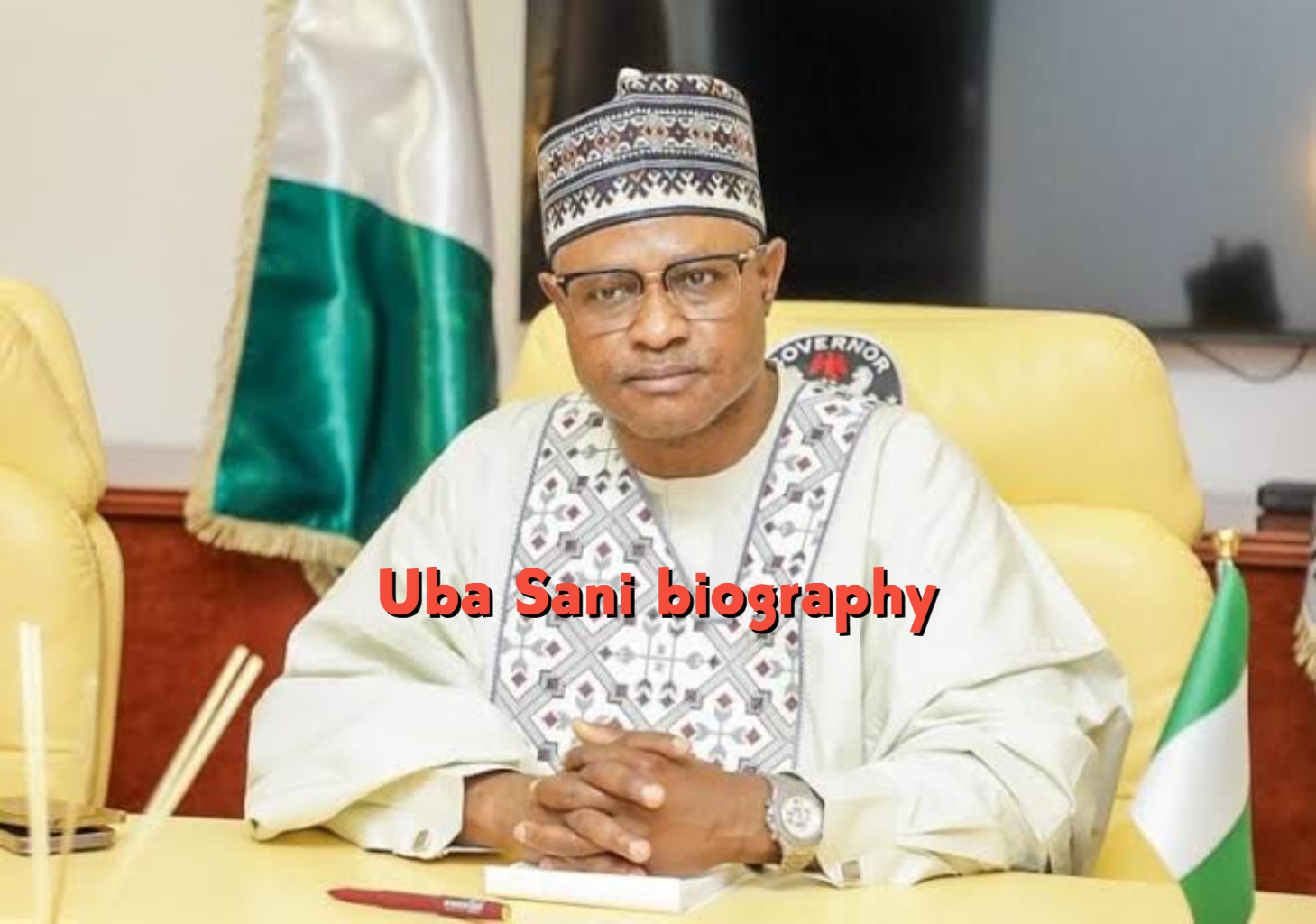
For readers searching for Uba Sani biography, what makes his story remarkable is the combination of pro-democracy activism, entrepreneurship, legislative experience, and his rise to become Governor of Kaduna State. Long before assuming the state’s highest office, he earned recognition as a civil rights advocate during Nigeria’s military era, later building a career in public service, business, and politics before emerging victorious in the 2023 governorship election.
Today, Uba Sani is widely regarded as one of Nigeria’s most influential northern politicians. Before becoming governor, he represented Kaduna Central Senatorial District in the Nigerian Senate, where he chaired the Senate Committee on Banking, Insurance and Other Financial Institutions. On May 29, 2023, he was sworn in as the Governor of Kaduna State under the All Progressives Congress (APC), succeeding Nasir El-Rufai.
See also: Abba Kabir Yusuf Biography: Age, Education, Wife, Political Career, and Net Worth (2026)
Uba Sani Biography Highlights
- Full name: Senator Uba Sani, CON
- Date of birth: December 31, 1970
- Age: 55 years old (as of 2026)
- Place of birth: Zaria, Kaduna State
- Nationality: Nigerian
- Occupation: Politician, businessman, development worker, civil rights activist
- Political party: All Progressives Congress (APC)
- Current position: Governor of Kaduna State
- Previous office: Senator representing Kaduna Central (2019–2023)
- Education: Kaduna Polytechnic, University of Abuja, University of Calabar
- Marital status: Married
- Net worth: $4 million
These biographical details are drawn primarily from the official Kaduna State Government profile and other credible public records. While online searches for Uba Sani net worth are common, there is no authoritative public disclosure confirming his personal wealth. Therefore, any specific estimate circulating online should be treated with caution.
Uba Sani Early Life and Background
Uba Sani was born on December 31, 1970, in Zaria Local Government Area of Kaduna State, northern Nigeria. Growing up in one of the country’s historic educational and commercial cities exposed him to diverse cultures and political ideas from an early age. His upbringing in Kaduna State would later influence his lifelong commitment to public service and grassroots development.
Unlike many politicians who entered public life after long careers in business or government, Uba Sani first became known through activism. During Nigeria’s years under military rule, he emerged as one of the prominent pro-democracy voices in northern Nigeria, campaigning for constitutional governance, civil liberties, and democratic reforms.
His activism came at considerable personal cost. Official biographies note that he was arrested and detained several times by military authorities because of his involvement in pro-democracy movements. These experiences helped shape his political philosophy and established his reputation as an advocate for justice, accountability, and inclusive governance.
Beyond politics, Uba Sani has consistently described development as a partnership between government and citizens. That philosophy has remained visible throughout his public career, influencing both his legislative priorities and his approach as governor.
Uba Sani Education
Anyone searching for Uba Sani education will discover that his academic journey combines engineering, business administration, and finance.
According to the official Kaduna State Government profile, he earned a Higher National Diploma (HND) in Mechanical Engineering from Kaduna Polytechnic. He later obtained a Postgraduate Diploma in Business Administration (PGDBA) from the University of Abuja, before completing a Master of Science (M.Sc.) in Finance at the University of Calabar.
This multidisciplinary educational background provided him with technical, managerial, and financial knowledge that would later prove valuable in both public administration and legislative work.
In addition to formal education, Uba Sani has participated in policy development, governance, leadership, and public administration programmes throughout his career. His supporters frequently point to this blend of engineering, finance, and governance experience as evidence of his technocratic approach to leadership. While unofficial websites occasionally present conflicting educational details, the qualifications listed above are those consistently recognized by official Kaduna State Government publications.
Uba Sani Professional Career Before Politics
Before becoming an elected public official, Uba Sani built experience across civil society, business, and government.
He first gained national recognition through his work in Nigeria’s democracy movement, where he helped organize campaigns against military rule and advocated for democratic governance. He served as National Vice Chairman (North) of the Campaign for Democracy (CD) and later as Deputy National Chairman (North) of the Joint Action Committee (JACON), organizations that played important roles during Nigeria’s democratic transition.
Following Nigeria’s return to democratic rule, he moved into public service. He served as Special Assistant to President Olusegun Obasanjo on Public Affairs, where he contributed to public communication and government engagement.
He also held advisory positions within the Federal Capital Territory Administration and later served as Special Adviser on Political and Intergovernmental Affairs to Kaduna State Governor Nasir El-Rufai. These appointments gave him practical experience in governance, political coordination, and intergovernmental relations before seeking elective office.
Outside government, Uba Sani established businesses in telecommunications and real estate while founding the Uba Sani Foundation, an organization focused on youth empowerment, entrepreneurship, skills acquisition, and support for vulnerable communities.
That combination of activism, entrepreneurship, philanthropy, and government service helped build his public profile long before he contested for elective office. Supporters often describe him as a bridge between civil society, business, and politics, while observers credit his diverse experience with shaping his pragmatic leadership style.
Uba Sani Entry Into Politics
Although Uba Sani had been involved in governance for many years through advisory roles, his transition into elective politics came with his decision to contest for the Kaduna Central Senatorial District seat.
Running on the platform of the All Progressives Congress (APC), he won the 2019 National Assembly election, defeating incumbent Senator Shehu Sani. His victory marked the beginning of his career as an elected federal legislator and positioned him among the most prominent political figures in Kaduna State.
Upon his inauguration into the 9th Senate, Uba Sani was appointed Chairman of the Senate Committee on Banking, Insurance and Other Financial Institutions, one of the National Assembly’s strategic committees.
During his time in the Senate, he sponsored 32 bills, several of which completed the legislative process and received presidential assent. Among the most notable were reforms relating to the Banks and Other Financial Institutions Act (BOFIA), the Nigeria Deposit Insurance Corporation (NDIC) Act, and amendments to the Asset Management Corporation of Nigeria (AMCON) Act. These legislative achievements strengthened his reputation as one of the Senate’s most active lawmakers and later became a major pillar of his campaign for governor.
Uba Sani Senate Career
Uba Sani’s tenure in the Nigerian Senate from 2019 to 2023 significantly elevated his national profile. Representing Kaduna Central Senatorial District, he focused on financial sector reforms, security, youth development, infrastructure, and social inclusion. His appointment as Chairman of the Senate Committee on Banking, Insurance and Other Financial Institutions placed him at the center of legislative efforts aimed at strengthening Nigeria’s financial system.
One of his most notable contributions was his leadership during the review and passage of the Banks and Other Financial Institutions Act (BOFIA) 2020, a landmark reform that modernized Nigeria’s banking regulations and expanded the Central Bank of Nigeria’s supervisory powers. He also sponsored amendments to the Nigeria Deposit Insurance Corporation (NDIC) Act and contributed to reforms involving the Asset Management Corporation of Nigeria (AMCON). These legislative measures were designed to improve financial stability, consumer protection, and investor confidence.
Beyond banking legislation, Uba Sani sponsored numerous bills and motions addressing education, healthcare, security, and infrastructure. He was also known for constituency projects that included classroom construction, rural road improvements, youth empowerment programmes, vocational training, scholarships, and medical outreach initiatives across Kaduna Central.
His legislative record strengthened his image as a policy-oriented lawmaker with both governance experience and technical knowledge of Nigeria’s economy. By the time preparations began for the 2023 governorship election, many political observers regarded him as one of the APC’s strongest candidates in Kaduna State. (Official National Assembly records; Kaduna State Government profile.)
2023 Kaduna State Governorship Election
The 2023 Kaduna State governorship election marked another important chapter in Uba Sani’s political career.
Following the completion of Governor Nasir El-Rufai’s second term, the All Progressives Congress (APC) nominated Uba Sani as its governorship candidate. His campaign emphasized continuity in infrastructure development while promising greater attention to security, rural development, education, healthcare, agriculture, and economic inclusion.
On March 18, 2023, Kaduna voters elected Uba Sani as governor. According to the Independent National Electoral Commission (INEC), he secured 730,002 votes, defeating the Peoples Democratic Party (PDP) candidate Isa Ashiru, who received 719,196 votes. The closely contested election was one of the most competitive governorship races in Nigeria during the 2023 general elections.
Following the declaration of results, Uba Sani was sworn in as the Governor of Kaduna State on May 29, 2023, becoming the fifth democratically elected governor of the state since Nigeria’s return to civilian rule in 1999.
His inauguration speech focused on restoring public trust, promoting inclusive governance, reducing poverty, improving security, and accelerating economic development throughout Kaduna State.
Uba Sani Governorship and Leadership Style
Since assuming office in May 2023, Uba Sani has projected a governance style centered on inclusion, dialogue, fiscal responsibility, security collaboration, and human capital development.
One of the earliest themes of his administration has been rebuilding trust between government and communities. Unlike the confrontational political climate that occasionally characterized previous years, his administration has emphasized consultations with traditional rulers, religious leaders, civil society organizations, youth groups, and security agencies.
Security has remained one of the defining priorities of his administration. Kaduna State has faced challenges involving banditry, kidnapping, and communal violence for several years. Uba Sani’s government has worked closely with federal security agencies while strengthening intelligence gathering, community engagement, and support for security operations. Official government statements indicate that several highways and communities previously affected by insecurity have recorded improvements under ongoing security initiatives.
Infrastructure has also remained a major area of investment. The administration has continued road construction projects while initiating new urban and rural road developments designed to improve transportation, commerce, and agricultural productivity.
Healthcare and education have similarly received increased attention. The government has expanded primary healthcare services, renovated schools, recruited teachers and healthcare workers, and invested in improving learning environments across the state.
Another important pillar of his administration has been agricultural development. Through partnerships with development agencies and private investors, Kaduna State has promoted mechanized farming, irrigation projects, agricultural financing, and value-chain development aimed at increasing food production and creating employment opportunities.
Overall, Uba Sani’s leadership style is frequently described as pragmatic, consensus-driven, and development-focused. His supporters argue that his background in activism, finance, and legislation has contributed to a governance approach that prioritizes dialogue alongside economic reforms.
Uba Sani Major Achievements (2023–2026)
Although still relatively early in his tenure, several initiatives have become closely associated with Governor Uba Sani’s administration.
One of the administration’s notable achievements has been strengthening security collaboration through improved coordination with federal security agencies, community leaders, and local stakeholders. Official reports indicate gradual improvements in security across several previously affected communities.
Infrastructure development has remained another major priority. The government has continued investments in road rehabilitation, urban renewal projects, rural access roads, drainage systems, and public facilities aimed at stimulating economic growth and improving transportation.
Education reforms have included increased funding for schools, classroom rehabilitation, teacher recruitment, learning materials, and policies intended to improve enrollment and educational outcomes.
Healthcare investments have focused on upgrading primary healthcare centres, expanding maternal and child health services, recruiting healthcare professionals, and improving access to essential medical services in rural communities.
The administration has also promoted financial inclusion through support for small businesses, women entrepreneurs, youth empowerment programmes, and agricultural financing initiatives designed to stimulate local economic activity.
Investment promotion has become another defining objective. Kaduna State has continued to position itself as a destination for domestic and foreign investment through reforms intended to improve the ease of doing business, industrial development, and public-private partnerships.
Uba Sani Personal Life
Despite his high public profile, Uba Sani maintains a relatively private family life.
He is married and has children, although he generally keeps details about his immediate family away from public attention. Throughout his political career, he has consistently emphasized service, humility, and community engagement rather than personal publicity.
Outside politics, he has maintained interests in entrepreneurship, philanthropy, youth development, and community empowerment through the activities of the Uba Sani Foundation, which supports education, vocational training, healthcare assistance, and economic empowerment programmes.
His public speeches frequently stress unity, peaceful coexistence, accountability, and inclusive governance, values that reflect both his activism background and leadership philosophy.
Uba Sani Awards, Recognition, and Achievements
Over the course of his career, Uba Sani has received recognition for his contributions to democracy, public service, and governance.
In 2025, he was conferred with the national honour of Commander of the Order of the Niger (CON) by President Bola Ahmed Tinubu, recognizing his contributions to public service.
His years in the Senate were widely acknowledged for legislative reforms in Nigeria’s financial sector, while his governorship has attracted attention for efforts aimed at improving security, infrastructure, healthcare, education, and investment promotion.
As with many serving public officials, assessments of his performance continue to evolve as additional policies and projects are implemented.
Uba Sani Net Worth 2026
Uba Sani’s net worth is estimated at $4 million as of 2026. His financial background is associated with his career in the private sector, entrepreneurship, investments and subsequent career in public service.
Before becoming governor of Kaduna State, Sani was involved in business and entrepreneurship. According to his official profile published by the Kaduna State Government, he established and successfully built businesses in telecommunications and estate management. His professional background also includes work in the financial sector, alongside his later career in politics and public service.
His wealth is therefore linked to his private-sector activities, including his telecommunications and estate-management businesses, as well as assets and investments accumulated throughout his professional career.
FAQs About Uba Sani
Who is Uba Sani?
Uba Sani is a Nigerian politician, former senator, businessman, civil rights activist, and the current Governor of Kaduna State. He assumed office on May 29, 2023.
How old is Uba Sani?
He was born on December 31, 1970, making him 55 years old in 2026.
What is Uba Sani’s educational background?
He obtained an HND in Mechanical Engineering from Kaduna Polytechnic, a Postgraduate Diploma in Business Administration from the University of Abuja, and an MSc in Finance from the University of Calabar.
Which political party does Uba Sani belong to?
He is a member of the All Progressives Congress (APC).
What did Uba Sani do before becoming governor?
Before becoming governor, he was a pro-democracy activist, businessman, presidential aide, political adviser, and senator representing Kaduna Central Senatorial District.
Conclusion
The story of Uba Sani’s biography reflects the journey of a man whose career has spanned activism, entrepreneurship, public administration, legislative leadership, and executive governance. From campaigning for democracy during Nigeria’s military era to serving in the Senate and eventually becoming Governor of Kaduna State, his public life has been shaped by a consistent focus on governance and development.
His emergence as governor in 2023 represented the culmination of decades of experience in civil society and public service. Since taking office, his administration has emphasized security, infrastructure, education, healthcare, agriculture, financial inclusion, and investment as key drivers of Kaduna State’s development agenda.
Whether viewed as a former activist, financial sector reform advocate, or development-oriented governor, Uba Sani has established himself as one of the leading political figures in contemporary northern Nigeria. As his administration continues beyond 2026, his long-term legacy will likely be assessed by the impact of his policies on security, economic growth, and the overall quality of life in Kaduna State.